Blog Summary
- ✦ SEO optimises your brand to rank in Google’s traditional blue-link results.
- ✦ AEO (Answer Engine Optimisation) optimises it to be cited, quoted, and recommended in AI-generated answers.
- ✦ These are two different games with two different scoreboards.
- ✦ Winning at SEO does not guarantee winning at AEO, and vice versa.
- ✦ Nearly 49% of clicks from traditional search have already been lost to AI-generated answers and that share is growing every quarter.
- ✦ AEO rewards structured, authoritative, original, and question-oriented content.
- ✦ SEO rewards authority, relevance, and technical signals.
- ✦ Both matter but in different ways.
- ✦Only 35% of URLs cited in Google AI Mode match Google’s organic top 10 - strong SEO rankings alone do not translate into AI visibility.
- ✦ Brands that treat AEO and SEO as a unified strategy instead of choosing one will dominate discovery across both traditional and AI-powered search.
- ✦ For Indian eCommerce and D2C brands, the AEO opportunity is still wide open because most competitors have not started optimising for AI visibility yet.
Here is a question that a lot of marketing teams are thinking about in 2026: we put money into SEO every month. Do we actually show up when someone asks a search tool a direct question about our category?
For most brands the answer is no. This is not because their SEO work is bad. It is because SEO (Search Engine Optimisation) and AEO (Answer Engine Optimisation) are used for two kinds of search. One helps you get ranked in the list of links that Google shows. The other helps you get mentioned in the answer that shows up before those links or even instead of them on platforms, like ChatGPT and Perplexity.
Both of these things are important. They just work in ways and give different results. Now most brands have only worked on one of them which is SEO or AEO not both.
What Is Search Engine Optimisation?
A Quick Search Engine Optimisation is the process of making your website and content so that Google and other search engines show your pages near the top of their results. When you type something into Google and press enter you get a list of links. Search Engine Optimisation decides where your page appears on this list and which searches it shows up for.
There are a things that affect Search Engine Optimisation results. One is how well your page matches what someone is searching for. Another is how well known and trusted your website is, which is shown by links from good websites. The condition of your website is also important. How it loads, if it works well on mobile phones and if search engines can easily look at and record it. People staying on your page for a time after clicking on it is also a good sign.
Search Engine Optimisation has been a part of online marketing for a long time over twenty years. It is still very valuable today. Google gets around 8.5 billion searches every day. For businesses online searches bring more people to their website than anything else. Search Engine Optimisation is not going away. However it does not tell us everything, about how people find brands because sometimes Google just gives a straight answer instead of a list of links.
What Is AEO? The New Practice Brands Are Overlooking
Answer Engine Optimisation is the practice of structuring your content and building your brands credibility so that tools like ChatGPT, Google AI Overviews, Google AI Mode, Perplexity and Gemini mention your brand in their responses when someone asks a question about something.
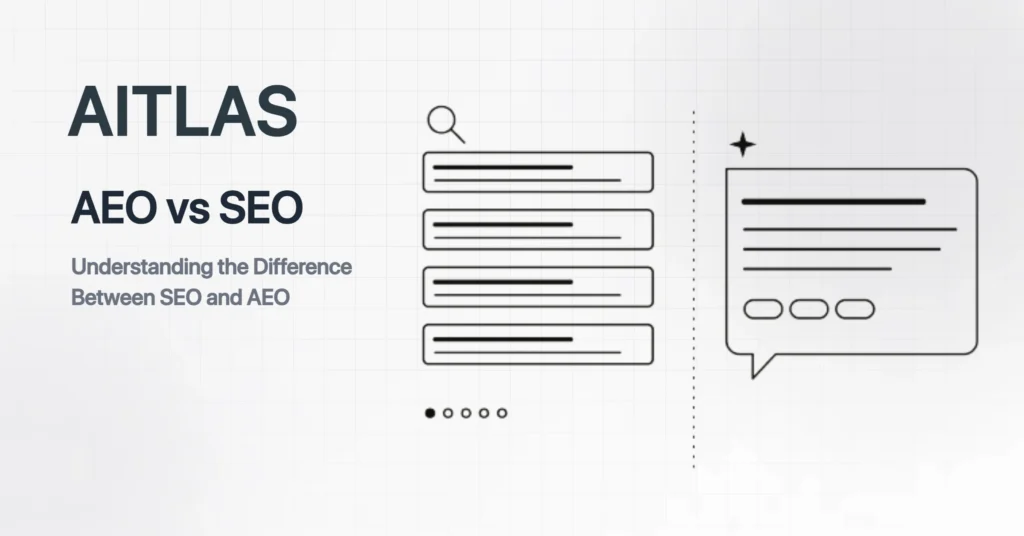
The difference between a search engine and an answer engine is really important to think about for a moment. A search engine gives you a list of documents. You decide which one to read. An answer engine reads a lot of sources. Gives you one answer. It does not give you options. It chooses which brands and sources are good to include. The person reading the answer usually stops there.
For brands this changes everything about being visible. In the way of doing things the goal was to show up in the search results. With Answer Engine Optimisation the goal is to be part of the answer. To be the brand that Answer Engine Optimisation tools mention when someone asks about the kind of thing you do the product you sell or the problem you can solve.
Answer Engine Optimisation is not a replacement for the way of doing things. It is a way to be visible that most brands have not done yet.. The difference, between the brands that have started and the ones that have not is getting bigger every month. Answer Engine Optimisation is a thing that brands need to think about.
AEO vs SEO: Where They Differ and Where They Meet
The confusion between AEO and SEO is understandable – they share common roots. But treating them as the same strategy creates real blind spots. Here is a clear side-by-side look at what actually separates them.
| Dimension | SEO | AEO |
|---|---|---|
| Primary goal | Rank in Google’s search results and drive clicks | Be mentioned or recommended in direct answers on tools like ChatGPT and Perplexity |
| Where it shows up | Google, Bing, Yahoo, DuckDuckGo | ChatGPT, Google AI Overviews, AI Mode, Perplexity, Gemini |
| How you measure it | Rankings, organic traffic, click-through rate | How often your brand is mentioned, how it is described, how it compares to competitors in responses |
| Content that works | In-depth, keyword-rich, well-linked pages | Clear question-and-answer structure, direct writing, original data, proper schema markup |
| What drives results | Backlinks, domain authority, technical health, keyword relevance | Credibility signals (E-E-A-T), content clarity, brand reputation across the web, first-party research |
| Measurement tools | Google Search Console, rank trackers, traffic analytics | No native dashboard — requires regular manual testing or a dedicated tracking tool |
| Overlap | Only 35% of pages cited by Google AI Mode also rank in the top 10 meaningful but far from complete overlap | |
That 35% figure deserves a moment of attention. Two out of every three pages referenced in a Google AI Mode response are pages that do not appear in the traditional top 10. A brand that has invested years into climbing the search rankings can still be absent from the responses people actually read. The two channels share a foundation but split apart quickly once you go beyond it – and that split keeps growing as answer-based search becomes more common.
Where SEO and AEO share common ground
Both reward content that is genuinely useful, factually accurate, and clearly written. Both benefit from a site that other respected sources link to. Both suffer from thin, recycled, or vague content. And both favour brands that publish consistently around a focused topic rather than scattering effort across unrelated areas. Doing the work for one will almost always give you a lift in the other to a point. Beyond that shared base, though, the strategies pull in different directions.
Where AEO asks for something different
AEO specifically rewards content that is easy for a tool to pull a clear answer from headings framed as questions, direct answers right below those headings, FAQ schema telling the page what each section contains, and important information sitting plainly on the page rather than hidden inside dropdown menus or interactive tabs. It also puts more weight on original data and research than SEO typically does, because tools prefer to reference something no one else has published. And it cares deeply about how your brand is described across the whole web – not just on your own site, but in reviews, articles, and forums – because that outside picture is a big part of how your brand gets characterised in a response.
Why AEO Matters More Than Ever in 2026
The shift toward direct answers has been building for years, but 2026 is the year it has moved from something to watch into something brands cannot afford to ignore.
49 percent of the clicks that people used to get from traditional search are now going to direct answers that show up before or instead of the results. Googles answer summaries are seen by 2 billion people every month in than 200 countries. ChatGPT has over 900 million people using it every week. Google also has a search experience called AI Mode that does not even show the traditional results page and instead gives users a response with some sources.
This means that people are talking about your brand in tools that your buyers use every day and you might not even know what they are saying. These tools might say something, about your product or they might say something old or wrong. They might even talk about your competitor first. Mention your brand later. If you do not work on Answer Engine Optimization you will not know what people are saying about your brand. You will not be able to make it better. Your brand is being described in these tools. You need to know what they are saying about Google and ChatGPT and other things that people use every day.
AEO for Indian Brands: The Opportunity Right Now
Most conversations about AEO focus on Western markets. The Indian opportunity is just as real and considerably less crowded.
Google has a share of the search market in India with over 95% of the market. As Googles answer features become more popular in India and they are growing fast it will have a big impact on how people in India find brands. Also many young people in India are using ChatGPT and Perplexity on their phones and this is changing the way they make purchasing decisions even before they visit a website.
Most online shopping brands in India have not changed their content to keep up with these changes. They do not know how their brand looks in an answer. They have not added the right schema markup to their pages. They have not published information that is specific to India, which is the kind of thing that tools like to reference. This is not something to worry about it is a chance to get ahead of the game. Brands that start working on this will have an advantage over others when they catch up.
Imagine someone who types ” D2C fulfilment partner in India” on Perplexity instead of Google. This person is already looking for an answer they want a recommendation, not just a list of links. If your brand is the one that is recommended you are already ahead of the competition, in their mind even before they visit your website. Google and these other tools are becoming really important for Indian buyers and brands need to think about how they can use Google and these tools to their advantage.
How to Optimise for AEO: 6 Practical Strategies
AEO is not one thing you add to a page. It is a set of habits and practices that, over time, make your brand the kind of source that tools reach for when composing a direct answer. Here is where to start.
1. Write Around Questions, Not Just Keywords
SEO starts with a keyword. AEO starts with a question – specifically, the question a real person would type into ChatGPT or ask Perplexity when they need something your brand offers. These are different. “Best D2C fulfilment platform India” is a keyword. “How do I choose a D2C fulfilment platform in India?” is a question. The second one is what an answer tool is built to respond to, and your content needs to be structured to answer it clearly and completely at the top of the section.
| Rewriting SEO headings as AEO headings |
|---|
| SEO: “eCommerce Shipping Solutions India” AEO: “What is the best shipping solution for eCommerce sellers in India?” |
| SEO: “D2C Fulfilment Platforms” AEO: “How do I choose the right D2C fulfilment platform for my business?” |
| SEO: “Return Management Software” AEO: “How can I reduce return rates for my eCommerce business in India?” |
2. Add FAQ Schema to Your Most Important Pages
FAQ schema is a small piece of structured code that tells search tools exactly which parts of your page are questions and which are the answers to those questions. For AEO, this is one of the fastest and most reliable improvements you can make. Prioritise your homepage, your core product or service pages, your category pages, and any long-form guide that covers a major topic in your space. Write the questions in plain, conversational language – the kind of thing a real person would actually type, not polished marketing copy.
3. Publish Research That Only You Can Publish
Answer tools strongly prefer referencing information that is not available anywhere else. Generic content that covers the same ground as dozens of other sites offers very little advantage here. But a piece of data that only you have – your platform’s shipping time averages by region, return rates by product category from your own sellers, a survey of 200 Indian eCommerce brands – becomes something worth pointing to precisely because it is unique. Even modest original datasets carry significant value in AEO because no competitor can produce the same numbers.
4. Make Sure Your Brand Looks the Same Everywhere
When a tool compiles a response about your brand, it pulls from your website, but also from reviews, articles, directory listings, and forum posts. If those sources contradict each other – different descriptions of what you offer, outdated pricing, old positioning – the tool ends up with a confused picture, and that confusion often shows up in the response. Audit your Google Business Profile, G2, Trustpilot, and any industry directory where your brand appears. Get the descriptions consistent, accurate, and current across all of them.
5. Build Genuine Credibility, Not Just Links
E-E-A-T (Experience, Expertise, Authoritativeness, and Trustworthiness) – are the standards Google uses to assess whether content is worth surfacing, and they apply just as much to AEO as to traditional search. In practice this means putting real names and credentials on your content, linking to the research you cite rather than just quoting it, keeping your pages factually up to date, and building deep knowledge in a specific area rather than publishing broadly across topics you do not have genuine expertise in. For Indian brands, including India-specific data and examples also signals that your content is relevant to the actual market your buyers are operating in.
6. Monitor How Your Brand Appears in Responses – Regularly
There is no dashboard for this. Unlike SEO, where Google Search Console shows you your rankings and impressions automatically, AEO requires you to go looking. Pick 15 to 20 questions relevant to your brand and category. Open ChatGPT, Perplexity, and Google’s answer features. Run those questions every week and note what comes back – whether your brand shows up, how it is described, where it sits compared to competitors, and whether anything said about it is out of date or simply wrong. That weekly habit is the foundation of any serious AEO effort.
Building a Combined AEO and SEO Strategy
The most effective approach is not to choose between AEO and SEO but to build both at the same time, starting from the foundation they share and then extending into what each one requires on its own.
The shared foundation is straightforward: well-written, in-depth content on topics your audience genuinely cares about, published by authors who know what they are talking about, and structured around the real questions buyers ask. This serves both channels. Adding FAQ schema, question-based headings, and clear direct answers on top of that helps both your traditional search visibility and your presence in direct responses – rich snippets and answer placements both benefit from the same structural improvements.
From there, layer in what AEO needs specifically: original research, active monitoring of how your brand is described across the web, and deliberate effort to get your brand mentioned in credible third-party publications and communities. These steps will not necessarily move your search rankings directly, but they build the kind of brand credibility that both channels reward over time. Think of it as two tracks sharing a starting line. The work you do on the shared base accelerates both. Then each track asks for something the other does not, and the further you go, the more important it becomes to invest in both deliberately.
How AITLAS Helps You Win at AEO
To understand what AEO wants from your brand is easy. You just need to read about it. The tough part is figuring out if what you are doing is actually working. Is your brand showing up in the places? Are people describing your brand correctly? Can your brand compete with brands that are doing the same thing?
If you do not know what is going on you are wasting your time on something you cannot even measure. You do not know which questions are related to your brand and which are not. You do not know if a tool is describing your product correctly or using information. You do not know if another brand is doing better than you in the things that matter to your customers.
AITLAS is a tool from Shiprocket that helps your brand be more visible. AITLAS gives you the information you need to know how your brand is doing. You can see how often people mention your brand, what they say about it and how you compare to brands. You can even see which things you need to improve so your brand can do better. AITLAS shows you how your brand appears on things, like ChatGPT, Google AI Overviews, Perplexity and Gemini. This helps you make your brand better and sell things to your customers.
Conclusion
Digital marketing has been using Search Engine Optimization for twenty five years. It is still here. When people search for things on the internet they often find what they are looking for through Search Engine Optimization. This is because Search Engine Optimization drives a lot of traffic to businesses.. Search Engine Optimization is not the only way people find brands now. And if you do not realize that you will lose money.
These days a lot of your customers read a short answer before they even look at the search results. This answer tells them about some brands. Leaves out others. It also describes products in its words, based on what it has read about the brand on the internet. If you do not use Answer Engine Optimization you have no idea what these descriptions say about your brand.. If your brand is even mentioned.
The good thing is that Answer Engine Optimization and Search Engine Optimization work together. When you create content and build credibility for one it also helps the other. So you do not have to do two things. You can just have one strategy that helps both Answer Engine Optimization and Search Engine Optimization. The brands that do this will be in a position for the future like in the year 2026 and after.
You can start now: just open ChatGPT and ask it something, about your business category. See if your brand shows up and how it is described. This simple check can make you realize how important Answer Engine Optimization is.. When you are ready to make a plan AITLAS can help you with that.
AEO stands for Answer Engine Optimisation. It means improving your content and online credibility so tools like ChatGPT, Perplexity, Google AI Overviews, and Gemini mention your brand when people ask questions related to your category.
Unlike SEO, which helps you rank in search results, AEO helps your brand appear inside the answer itself.
No. SEO and AEO both matter.
SEO helps your website rank on search engines like Google. AEO helps your brand appear in AI-generated answers on tools like ChatGPT and Perplexity.
The best strategy in 2026 is to invest in both together.
Start by rewriting your page headings as real questions people ask.
Then answer those questions clearly in the first few lines below each heading. Add FAQ schema to your important pages as well.
This improves both SEO and AEO visibility.
Start by searching the kinds of questions your customers would ask on tools like OpenAI ChatGPT, Perplexity AI Perplexity, Google AI Overviews, and Gemini.
Check:
1. Whether your brand appears
2. How your brand is described
3. Which competitors are mentioned
4. Whether the information is accurate or outdated
5. Because AI responses change regularly, this needs to be monitored consistently – not just once.
Shiprocket AITLAS helps automate this process by tracking your brand visibility across AI platforms. It shows how often your brand is mentioned, how AI tools describe your business, and where competitors are appearing instead of you, helping you improve your AEO strategy over time.
Basic improvements like FAQ schema and clearer answers can start helping within a few weeks. Stronger credibility signals – like original research, reviews, and third-party mentions – usually take a few months to influence AI responses consistently.
More people now get answers directly from AI tools instead of clicking search results. If your brand is not mentioned in those answers, you may lose visibility before users even visit a website. AEO helps make sure your brand is part of the conversation.
Share this article
Newsletter
Stay ahead of AI search
Weekly insights on AI visibility, AEO strategies, and brand intelligence. No spam.

Sahil Bajaj: With 7+ years of digital marketing expertise, I'm dedicated to fusing technology and creativity for business success. Known for innovative strategies that drive growth and a passion for continuous improvement.
Related Articles